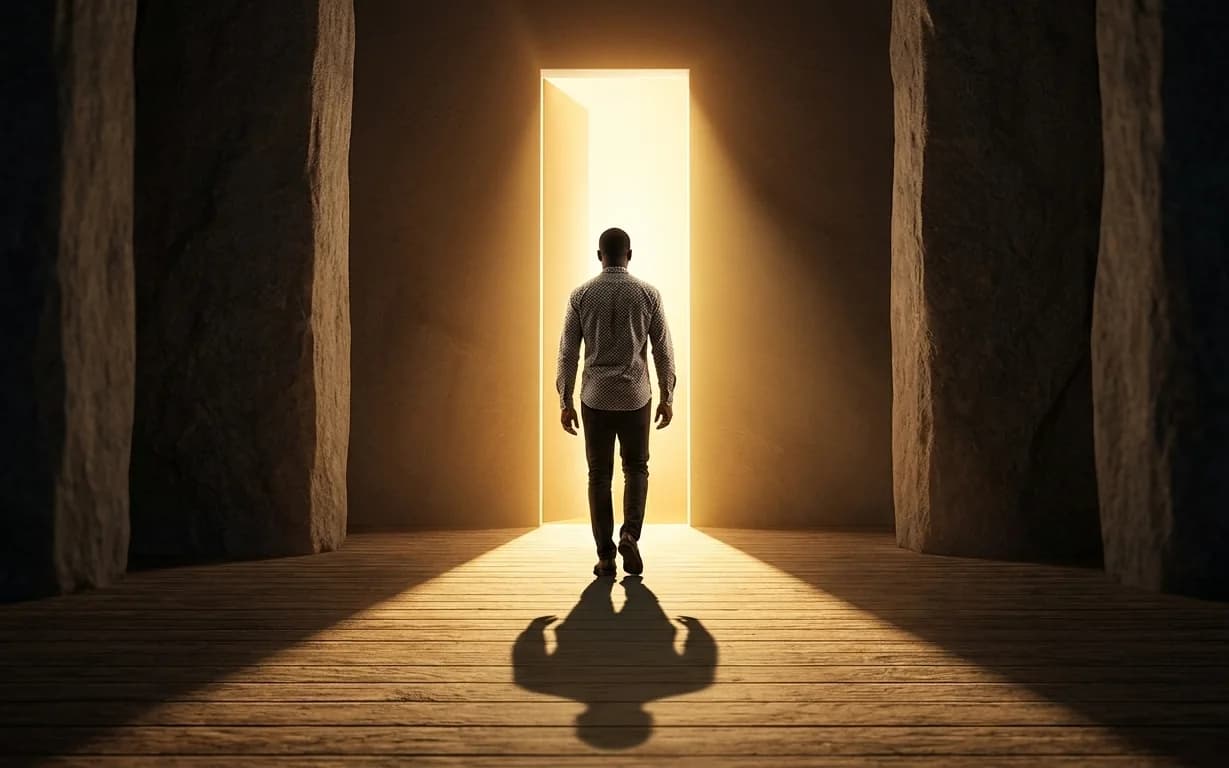
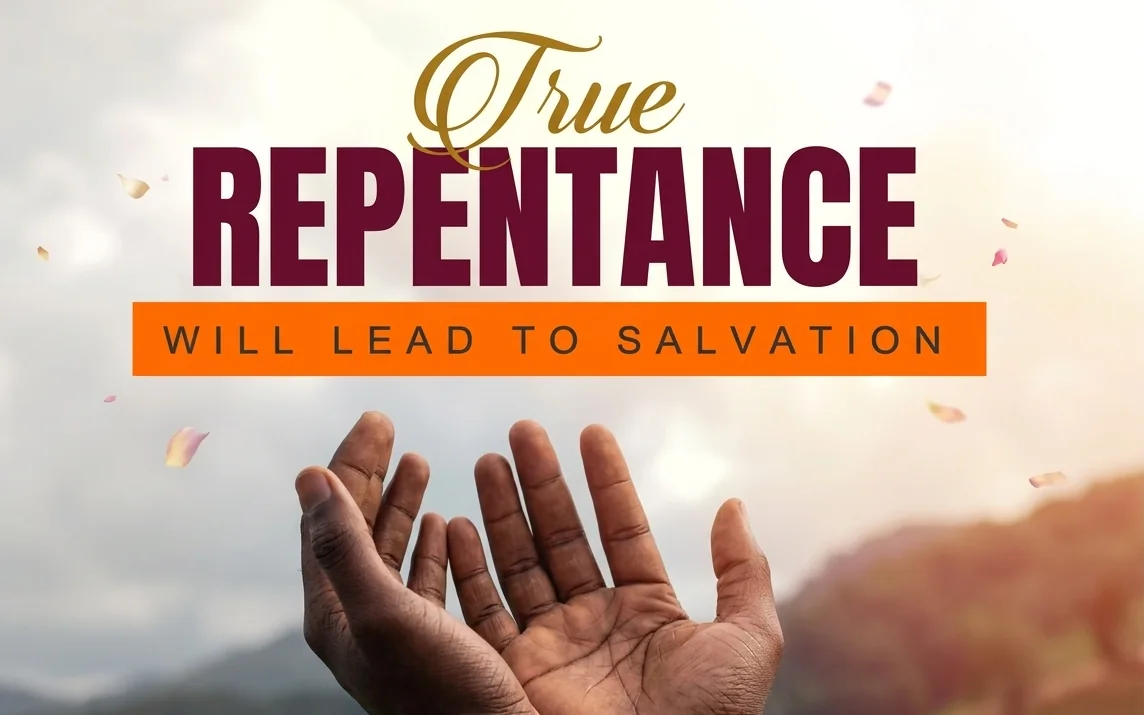
Repentance matters because it is the door. It is the point where forgiveness is received, a broken relationship with God is restored, and a different life begins. Everything else in the Christian life comes after it — which is why it was the first word Jesus preached.
Why does it come first?
Because it did, historically. When Jesus began preaching, this is how He opened:
The time is fulfilled, and the kingdom of God is at hand: repent ye, and believe the gospel.
That was not a warm-up to the message. It was the message. John the Baptist had opened with the same word, and Peter used it again on the day the church began, when the crowd asked what they should do (Acts 2:38).
Three different men, at three turning points, all starting in the same place.
What does repentance actually do?
Scripture attaches four things to it, and none of them is a reward for good behaviour. Each is something repentance receives.
- It opens forgiveness. Confession is the point at which sins are forgiven and cleansed (1 John 1:9).
- It restores the relationship. Sin is what created the distance in the first place (Isaiah 59:2).
- It breaks the grip of the sin. Covering sin keeps a person bound; confessing and forsaking it brings mercy (Proverbs 28:13).
- It prepares a person for eternity. Peter writes that God's patience with the world exists so that people would come to repentance (2 Peter 3:9).
How is it different from feeling sorry?
Feeling sorry is an emotion. Repentance is a turning that changes how a person lives. The two often arrive together, but Scripture keeps them apart:
For godly sorrow worketh repentance to salvation not to be repented of: but the sorrow of the world worketh death.
Sorrow comes before repentance in that sentence, not instead of it. Judas and Peter both felt the weight of what they had done. Only one of them turned.
The picture Jesus chose
When He explained repentance, He did not describe a courtroom. He told a story about a son who took his inheritance, wasted it, and ended up feeding pigs and envying their food. The turning point arrives in four words: he came to himself (Luke 15:17).
The young man rehearses an apology on the road home and plans to ask for work as a servant. He never finishes saying it. While he was still a long way off, his father saw him and ran.
That is what repentance looks like from God's side. Not a hearing. A father running.
What does real repentance look like?
- It is specific — naming the actual sin rather than praying generally about wrongdoing.
- It forsakes, not just confesses — cutting off whatever makes returning easy.
- It makes things right — Zacchaeus repaid fourfold before anyone asked him to (Luke 19:8).
- It shows in ordinary life — in money, speech and relationships, not only in church.
And it is not one event sealed in the past. A repentant heart keeps turning, each time God shows it something new.
Why it matters today
The importance of repentance is finally quite simple. It is the one thing a person can do today, from wherever they are, with nothing prepared in advance. No fee, no waiting period, no qualification to earn first.
The invitation carries no conditions. Only a direction.
If you would like to talk with someone about this, you are welcome to contact us, or to visit any of our services.
Key scriptures
Mark 1:15
Repent and believe the good news!
Mark 1:15, NIV · as set out in Are you ready for the return of Jesus Christ at the rapture?
- Acts 2:38
1 John 1:9
If we confess our sins, he is faithful and just to forgive us our sins, and to cleanse us from all unrighteousness.
1 John 1:9, KJV · as set out in What does the Bible say about repentance and holiness?
- Isaiah 59:2
Proverbs 28:13
He that covereth his sins shall not prosper: but whoso confesseth and forsaketh them shall have mercy.
Proverbs 28:13, KJV · as set out in What does the Bible say about repentance and holiness?
- 2 Peter 3:9
2 Corinthians 7:10
For godly sorrow worketh repentance to salvation not to be repented of: but the sorrow of the world worketh death.
2 Corinthians 7:10, KJV · as set out in What is the importance of repentance?
- Luke 15:17
- Luke 19:8