TeachingsVerified

What happens at a Repentance and Holiness service?

A full morning, from 7:30am to about 2:00pm — the order of the service, what to wear, what to carry, whether you will be asked for money, and how to find the altar nearest you.

4 min read

Never been to a Repentance and Holiness service before? You may be wondering what actually happens when you arrive.

How long does the service take? What happens first? What should you wear? Will you be asked to give money? And what should you carry with you?

Here is what you can expect.

How long does the service last?

A full service runs from about 7:30am to 2:00pm.

That is longer than many church services, so it helps to know this before you come. People may also arrive after the service has started, so you do not need to worry if you cannot make it right at 7:30am.

Water is provided during the service, and it is a good idea to eat before coming, especially if you plan to stay for several hours.

What should I carry with me?

You do not need to come with anything complicated.

A Bible, notebook, and pen can be useful, especially because the service includes extended preaching and teaching.

You can use your notebook to write down Bible verses, points from the message, or anything you would like to go back and study later.

So, if you are coming for the first time, a simple Bible, notebook, and pen is a good place to start.

What happens during the service?

The morning follows a simple pattern of prayer, worship, thanksgiving, preaching, praise, offering, and a second preaching session.

Here is the usual flow:

  • 7:30am — Prayer: The morning begins with prayer.
  • 8:00am — Worship: A longer period of worship follows, running until about 10:30am.
  • 10:30am — Thanksgiving and adoration: The congregation gives thanks to God before the preaching.
  • 11:00am — First service: The first preaching session begins.
  • 12:00pm — Praise and worship: Another period of praise and worship follows.
  • 12:30pm — Offering and receiving of guests: The offering is taken, and visitors are welcomed.
  • 1:00pm — Second service: A further preaching session follows, ending at around 2:00pm.
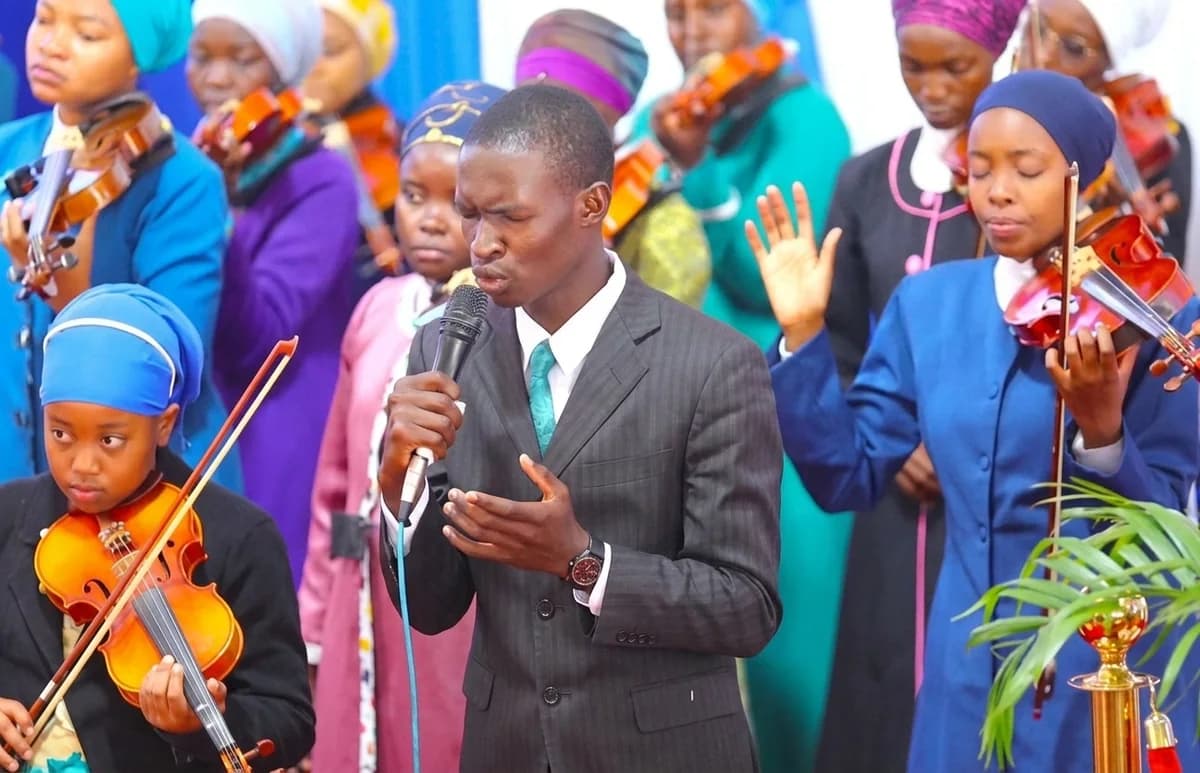
A young man singing into a microphone at the front of a congregation, with a string orchestra of women in headscarves playing violins behind him.
Worship runs from about 8:00am to 10:30am, and it is led rather than performed.

One thing you will notice is that worship and prayer are a major part of the morning. The service is not simply a short worship session followed immediately by a sermon.
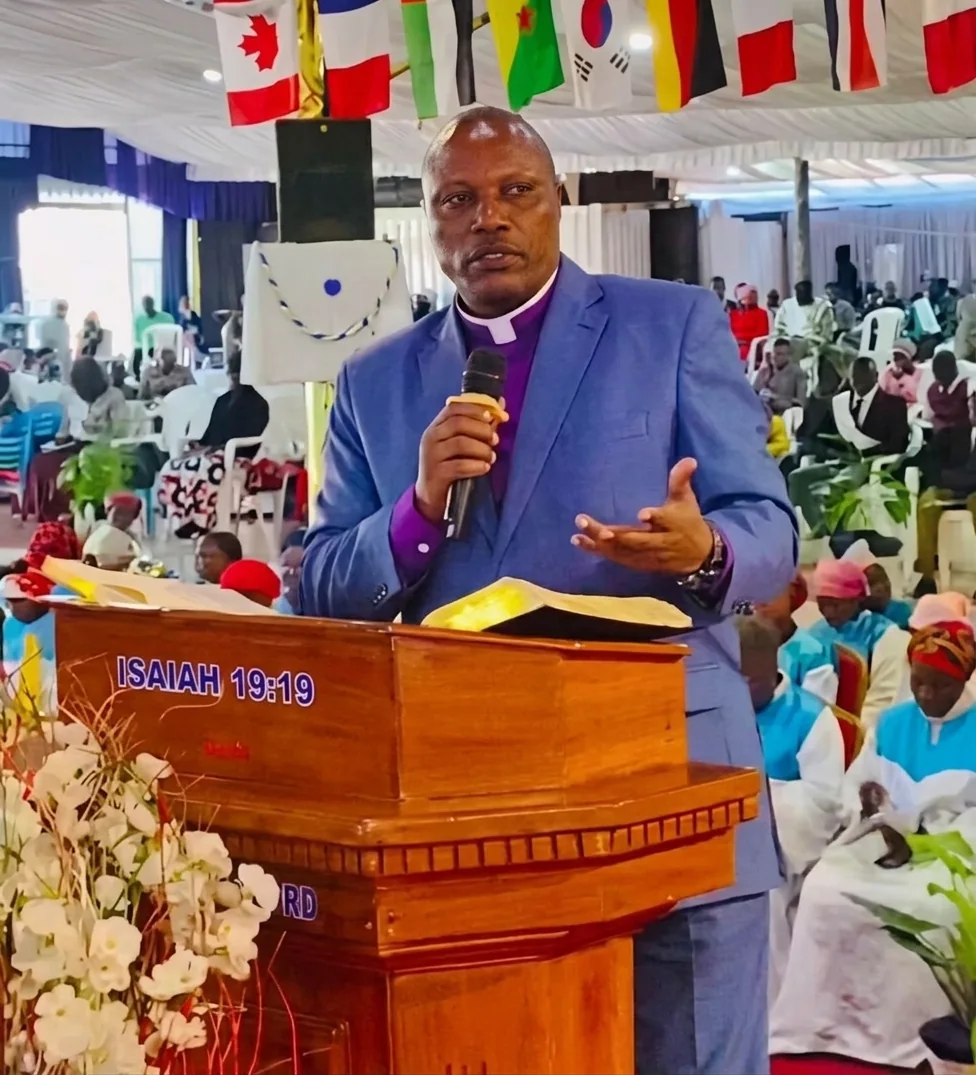
A preacher in a blue suit speaking from a wooden pulpit marked ISAIAH 19:19, an open Bible before him and the flags of many nations hanging above.
The first preaching session begins at about 11:00am; a second follows at 1:00pm.

What language is used?

Services are conducted mainly in English and Swahili, with translation provided.

In some rural areas, local languages may also be used around the altars.

So if you are worried about not understanding every language spoken, you can still follow what is happening through the translation.

What should I wear?

Come as you are.

You will commonly see women wearing long dresses or skirts, with some covering their heads, while men commonly wear shirts and trousers.

If you would like to dress similarly to what you will see at the service, you can choose a long skirt or dress and a head covering. But if you do not have those clothes, do not let that stop you from coming.

The ministry's teaching on Christian dress can be read in How should Christians dress?

What happens if I'm a visitor?

Visitors are normally invited to the front at around 12:30pm and asked to give their name and where they have come from.

It is simply part of welcoming guests.

You are not expected to give a testimony or explain your personal life. If you are visiting for the first time, knowing this beforehand can make the moment feel much less surprising.

Will I be asked for money?

No.

There is an offering during the service, but giving is voluntary. Having nothing to give does not affect your welcome.

The ministry also rejects the idea that giving money is a way of buying God's blessing or guaranteeing financial prosperity.

If you have nothing to give, you can still come, worship, listen, and be part of the service.

Can I bring my children?

Yes.

Children can attend the service with their parents. Sunday school runs from approximately 10:00am to 11:00am, after which the children return for the preaching.

Porridge is provided for the children. Parents may also bring a small snack for their child if needed.

Do I need to be a Christian?

No.

You do not have to be a member of the Ministry of Repentance and Holiness to attend.

You may simply be curious. You may have questions about God. You may be looking for a church. Or you may want to understand the message of repentance and holiness for yourself.

You are welcome to come and listen.

Where can I find a service near me?

Altars of the Ministry of Repentance and Holiness are located in different parts of Kenya and beyond.

If you would like to attend, you can find the altar nearest to you and get the location and service details before you go.

What should I expect as a first-time visitor?

Expect a long morning centered on prayer, worship, the Word of God, repentance, and preparation for the coming of Jesus Christ.
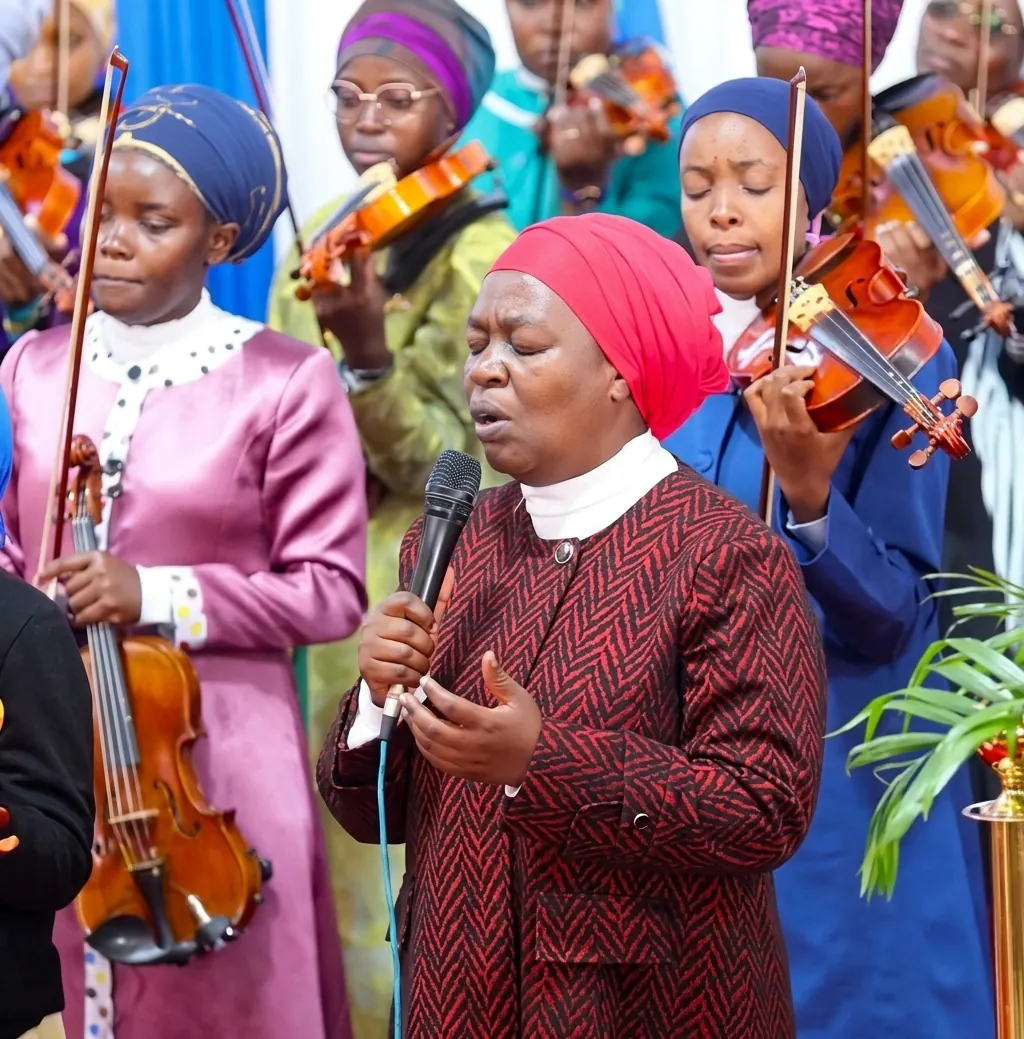
A woman in a red head covering singing into a microphone, violinists standing behind her.
Prayer, worship and the Word take up most of the morning. You are not expected to know the songs.

You do not need to know all the songs or understand the order of the service before you arrive.

Bring your Bible, notebook, and pen. Come ready to listen, worship, and learn.

You are welcome.

← ALL ARTICLES

Explore the topic

TeachingsExpositions and sermons from the Ministry of Repentance and Holiness — the Scriptures opened for the church.

Explore more

  • Teachings11 reader said this helped themNot shared yet

    What does the Highway of Holiness mean in Isaiah 35?

    Isaiah 35 promises a road through the wilderness that the unclean cannot walk. What that highway is, who it is for, and what walking on it asks of a person today.

    by The Editorial Desk

  • Teachings0 readers said this helped themNot shared yet

    Are you ready for the return of Jesus Christ at the rapture?

    Jesus promised to come back, and Scripture tells the Church to keep watch rather than to calculate the day. What readiness actually means, and how a person prepares for it now.

    by The Editorial Desk

  • Teachings22 readers said this helped themNot shared yet

    How should Christians dress?

    Scripture gives principles, not a uniform — and no measurement. Straight answers on modesty, head covering, skirt length, respectful church clothing, provocative dress, and why one church applies these principles the way it does.

    by The Editorial Desk

  • Teachings11 reader said this helped themNot shared yet

    What are the requirements to enter heaven?

    Scripture states one condition rather than a list: faith in Jesus Christ, received as a gift rather than earned as a standard. What that means for good works, repentance, baptism — and whether a person can know.

    by The Editorial Desk

  • Teachings33 readers said this helped themNot shared yet

    What is the importance of repentance?

    Repentance is the door — the point where forgiveness is received and a different life begins. Why it was the first word Jesus preached, what Scripture attaches to it, and how it differs from simply feeling sorry.

    by The Editorial Desk

  • Teachings0 readers said this helped themNot shared yet

    What does the Bible say about repentance and holiness?

    Repentance is the door; holiness is the road. What each word means in Scripture, how a person actually turns, and why the Bible never preaches one without the other.

    by The Editorial Desk

  • Teachings22 readers said this helped themNot shared yet

    What is the rapture of the church?

    Biblical meaning, timing, and readiness — what Scripture says about believers being caught up to meet the Lord, and why no one is given the day.

    by The Editorial Desk

  • Church History22 readers said this helped themNot shared yet

    Who is Prophet David Owuor?

    A Kenyan preacher and a former cancer researcher — the birth, the degrees, the six published papers, the state engagements, and the tests Scripture gives for weighing a prophet.

    by The Editorial Desk

Ask a question

Ask the ministry. Ask about the Bible.

Nobody should have to hold a question about what is taught here because there was nowhere to put it. Ask plainly — a hard question asked in good faith is welcome, and it reaches the desk directly.

Read what has already been answered

  • The Ministry of Repentance and HolinessWhat it teaches and why, what it has preached, what stands in the prophecy archive.
  • The BibleA passage you are working through, a doctrine, something you have heard taught and want tested against Scripture.
  • Or this teachingThe page you are standing on now — it is sent with your question, so the answer is about the right thing.

You stay anonymous. Your name and email are optional — leave them blank and your question arrives with nobody’s name on it. There is no account to make, no cookie set, and no address kept beside what you wrote. An email, if you give one, is used to write back to you and is never published.

Both of these are optional. Fill them in only if you would like a reply meant for you.

Anonymous unless you say otherwise.

Pastoral care

In need of spiritual help?

Reach out on the hotline, on WhatsApp, or by email. Someone from the ministry will respond.

Head office · 195 Ruaka Rd, Runda, Nairobi, Kenya